
'Before going to battle, Captain Anuj Nayyar gave me the engagement ring and photograph of his fiance.' 'I told him, "Why don't you keep it? It will motivate you to fight'.' 'He said he did not want the photograph to fall in the dirty hands of the enemy.' 'I wondered why he was giving it to me. Did he feel he would not return?'
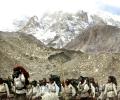
President Ram Nath Kovind presents the President's Colours to the Ladakh Scouts Regimental Centre today, August 21. These are normally presented to units that distinguish themselves consistently over decades. The Ladakh Scouts became a regular army regiment only in June 2001 after its stunning performance in the Kargil conflict, notes Ajai Shukla.

IAF Chief Dhanoa and Abhinandan took a sortie on the MiG 21 jet from the Pathankot air base.

On the first anniversary of the deadly clashes, the army said the supreme sacrifice of the soldiers while fighting the adversary in the "most difficult" high altitude terrain will be "eternally etched" in the memory of the nation.
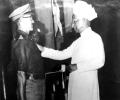
'Anglo-Indians have played a significant role at the forefront, meeting every challenge to the security of the motherland.' A fascinating excerpt from Barry O'Brien's The Anglo-Indians: A Portrait of a Community.
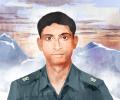
Major Adhikari was a man par excellence and had won our hearts. His supreme sacrifice for the nation shook us till the roots. A fascinating excerpt from Param Vir Chakra Captain (Honorary) Yogendra Singh Yadav's book, The Hero of Tiger Hill.

A war hero looks back at the men and the moments that forged India's greatest military victory.

'The Ladakh Scouts are a fantastic mountain troops suited to this terrain.' 'Other troops have to first get acclimatised, but these men are tough mountain people.'

'The tank battle was fought at ranges of 300-700 metres.' 'It was a rare example of the complete destruction of a squadron by another squadron.'
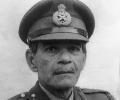
Lieutenant General Walter Anthony Gustavo Pinto was known for his dynamic, bold and aggressive leadership in the Battle of Basantar during the 1971 War. Lieutenant General B T Pandit -- who was awarded a Vir Chakra for his courage during that battle -- salutes the Victor of Basantar who passed into the ages last week.

NGK -- Nandha Gopalan Kumaran is only meant for Suriya fans, feels A Ganesh Nadar.
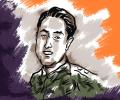
At a height of 17,200 feet, his handwriting mangled by the cold, Captain Vikram Batra wrote this letter to his twin brother.
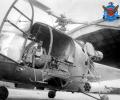
'Overnight, the Chetak had new markings and thereafter flew on the call sign, Echo-Bravo-Romeo.' 'By all accounts, this was the first aircraft of the Bangladesh Air Force.'

'Khalistan would have been in existence today, but for the army.'

Brigadier M P Bajwa (retd), commander of the troops that captured Tiger Hill, tells Rediff.com's Archana Masih how a band of young soldiers won the Kargil War's most famous battle with their blood and grit.

'I realised what a great leader he was by the way he took decisions to undertake the most-risky of missions.'

'Rezang La was a unique battle.' 'It was not a large scale battle like the Battle of Kohima which involved a large number of troops.' 'Here there was just a company that fought it out till the last man.'

The Chinese admitted that they had suffered the maximum casualties fighting in the first battle on October 20, 1962, and these casualties had been inflicted mostly by 2 Rajput. Claude Arpi salutes Major B K Pant and his fighting force of 112 men, 82 of whom lost their lives in the Battle of Namkha Chu, and whose courage must never ever be forgotten by a grateful country for who they laid down their lives.
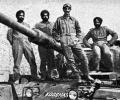
'He was unlike anyone else I had met until then or ever since.' Lt Gen Ashok Joshi (retd) remembers one of India's most famous soldiers who passed away on Sunday.

Decommissioned aircraft carrier INS Vikrant's voyage came to an end on Friday as workers at the Darukhana ship-breaking yard in Mazgaon docks in Mumbai began scrapping down the warship.

Looking at the most touching Hindi movies inspired by true-life events.

Claude Arpi salutes Lieutenant General Zorawar Chand Bakshi, India's most decorated general, who passed into the ages recently.
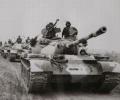
Why did Pakistan sign a cease-fire without acquiring Kashmir, which was the sole purpose of the 1965 War, asks Ahmad Faruqui.

By jettisoning the seniority principle, the government has sent a strong signal that only merit and suitability will count in occupying posts in the higher echelons of the military, writes national security expert Nitin Gokhale.
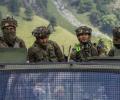
Today, the Ladakhis and Tibetans have been joined by the Sikhs, the Madrassis, the Garhwalis, the Rajputs, who are well trained psychologically and otherwise, to defend the nation, observes Claude Arpi.
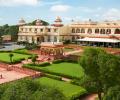
A battle royale, fought over 15 long years, comes to an end as a prince and a princess -- grandchildren of the legendary Rajmata Gayatri Devi -- get back the Jai Mahal Palace Hotel from their step-uncles.
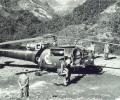
Air Commodore Nitin Sathe discovers how the IAF trained Pakistani air force pilots, during the 1971 War, which led to the birth of the Bangladesh air force.
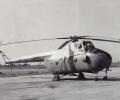
The retreating Pakistani troops were heading towards Dacca and they had to be stopped at all costs. The Eastern Army Commander, in his orders to General Sagat Singh, had reiterated that he did not want the troops of 4 Corps to cross the Meghna river. But General Sagat had other plans to threaten Dacca and ensure that the pressure would make the Pakistani commanders capitulate. This is where the IAF helicopters came in.

Air Vice Marshal Arjun Subramaniam lists the major operational takeaways from the 1971 War in his new book 'India's Wars, A Military History, 1947-1971'.

'Our biggest problem has been keeping this country together.' 'Nation building is never easy. It is a very difficult task.' 'Even 70 years is not too long a time.'

'Tying somebody to the jeep is not the military way, but the officer was able to come out of the situation without any bloodshed.' 'I am not supporting him, but I am also not criticising him.' 'He had to use some mechanism to save the uniformed personnel, many of whom were Kashmiri boys of the J&K police,' points out Lieutenant General D B Shekatkar (retd), who was instrumental in the surrender of a record 1,267 terrorists in Kashmir.

'Never lose your optimism. Never lose your aspiration and never -- even if India becomes a prosperous consumer society -- never ever lose that shining light in your eyes,' advises Dr Peter McLaughlin, headmaster of the Doon School.

'General J S Aurora, the commander of the Indian forces in the East, asked General Sagat Singh to withdraw his troops who were on the move to Dacca -- but he refused.' 'He said, "Jaggi, over my dead body".' 'Therefore, I say the creator of Bangladesh was General Sagat Singh.'
